
PaaS vs Kubernetes: Simplifying Application Deployment
 Niklas KarolyFounder Nodion
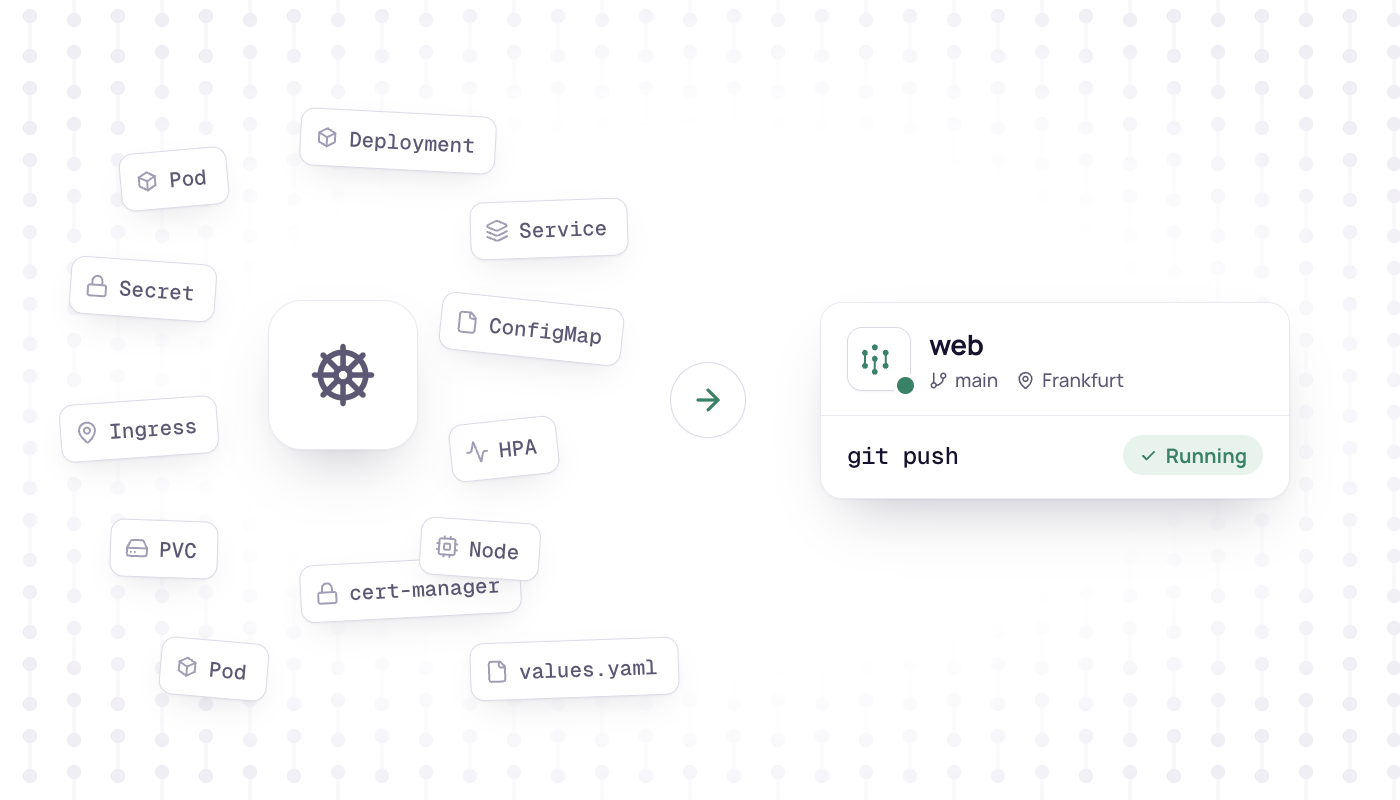
In short
- Kubernetes is the standard for container orchestration, but it takes deep knowledge of its objects and constant maintenance.
- Managed Kubernetes runs the control plane for you, yet your team still works with pods, services and YAML and adds tools for scaling, logs and metrics.
- A PaaS abstracts the infrastructure: you deploy code, and the platform builds, runs and scales it.
- Kubernetes fits teams that need fine-grained control and can staff it; a PaaS fits teams that want to focus on the application.
In today's rapidly evolving digital landscape, efficient and effective software deployment is more critical than ever. Development teams are constantly seeking tools and platforms that not only simplify their workflow but also ensure stable and scalable application performance. Two significant players in this realm are Kubernetes and Platform as a Service (PaaS) solutions. This blog post aims to provide a thorough comparison of PaaS vs Kubernetes and shed light on why a simplified PaaS solution could be a beneficial choice for your team.
Understanding Kubernetes and its Complexities
Kubernetes has emerged as the de facto standard for container orchestration. The power and flexibility it offers have made it the go-to choice for many organizations looking to deploy and manage containerized applications. Kubernetes provides advanced features such as service discovery, automatic bin packing, storage orchestration, self-healing, and horizontal scaling.
However, despite its impressive capabilities, Kubernetes is often critiqued for its complexity. The steep learning curve associated with Kubernetes can become a significant roadblock for development teams. Dealing with configuration files (YAML files), understanding subtleties of deployments, pods, nodes, services, and managing clusters can quickly become overwhelming. This complexity often results in teams having to hire specialized roles such as Site Reliability Engineers (SREs) or DevOps professionals.
Moreover, a significant portion of time and resources go into maintaining the Kubernetes environment. Keeping the system up-to-date, secure, and stable requires constant attention and effort. Additionally, while Kubernetes offers automated scaling, the configuration often requires a deep understanding of Kubernetes primitives and can be complex to set up and manage.
Managed Kubernetes: A Slightly Less Bumpy Ride?
Recognizing the complexities of managing a Kubernetes cluster, cloud providers began offering Managed Kubernetes services. These services aim to reduce the overhead of maintaining a Kubernetes cluster by managing and controlling underlying infrastructure and providing automation for operational tasks.
However, while managed Kubernetes services do offload some of the administrative burdens, they still expose the inherent complexity of Kubernetes. Users need to understand Kubernetes primitives and concepts to use these platforms effectively. Moreover, setting up automated scaling or gathering metrics and logs often requires additional configuration or the use of other tools and services.
Enter PaaS: A Breath of Fresh Air
In contrast to Kubernetes and Managed Kubernetes offerings, Platform as a Service (PaaS) solutions have a different philosophy: abstracting away as much of the operational complexity as possible to let developers focus on what they do best—writing code.
PaaS solutions provide a platform that allows developers to build, deploy, and scale applications without worrying about the underlying infrastructure. They automate the process of deployment, scaling, and infrastructure management. This level of abstraction significantly reduces the need for specialized roles to manage the deployment environment, reducing operational costs and freeing up your resources to focus on delivering value to your customers.
Scaling Simplified
Scaling, which can be a complex process in a Kubernetes environment, is often far more straightforward with PaaS solutions. While Kubernetes does offer auto-scaling, it requires careful configuration of resource requests and limits and the setting of appropriate thresholds. Even with Managed Kubernetes, auto-scaling can require additional setup or tooling to fully optimize.
On the other hand, PaaS solutions typically make the process of scaling as simple as a button click or an API call. There's no need to deal with complex configurations or extra tooling—PaaS solutions handle these intricacies, making the scaling process straightforward and seamless.
Reduced Operational Roles and Responsibilities
One of the significant advantages of a PaaS solution over Kubernetes is the reduction in operational roles and responsibilities. Kubernetes' complexity often necessitates the presence of dedicated SRE or DevOps roles to manage the platform effectively. This requirement increases operational costs and detracts resources that could be better used to enhance your application and provide value to your customers.
By abstracting away the complexities of the deployment process, a PaaS solution eliminates the need for specialized personnel to handle your deployment environment. This not only reduces operational costs but also enables your team to focus entirely on development.
Embracing a Streamlined Development Workflow
While Kubernetes undoubtedly has a place in the world of container orchestration, the platform's complexity often introduces more challenges than it solves. It can shift the focus from coding to managing infrastructure—a trade-off many teams are not willing or able to make.
On the contrary, PaaS solutions offer a simpler, streamlined approach. They manage the complexities of deployment, scaling, and infrastructure management, leaving developers to focus on what they do best: coding.
In conclusion, the choice between Kubernetes and a PaaS solution largely depends on your team's requirements, expertise, and resources. If your team values simplicity, streamlined operations, and wants to focus on development rather than infrastructure management, a PaaS solution may be the better choice.
Frequently asked questions
What is the difference between PaaS and Kubernetes?
Kubernetes is a container orchestrator: you define deployments, services, ingress and scaling yourself and keep the cluster running. A PaaS hides that layer: you push code or an image, and the platform builds, deploys, scales and maintains the infrastructure.
Is managed Kubernetes the same as a PaaS?
No. Managed Kubernetes takes over the control plane, but you still work with Kubernetes concepts and configuration, and autoscaling, logs and metrics often need extra setup or tools.
When is Kubernetes the better choice?
When you need fine-grained control over scheduling, networking or custom operators and have the SRE or DevOps capacity to run it.
When is a PaaS the better choice?
When your team wants to spend its time on the application instead of the platform, without dedicated staff for cluster operations.